
|


|
| REVIEWS | PODCASTS | TOP TEN | VIDEO | FEATURES | TOP MOVIES | ABOUT | MERCH |
GODZILLA: MINUS ZERO (2026)Written by Matthew Pejkovic / 08 November 2026 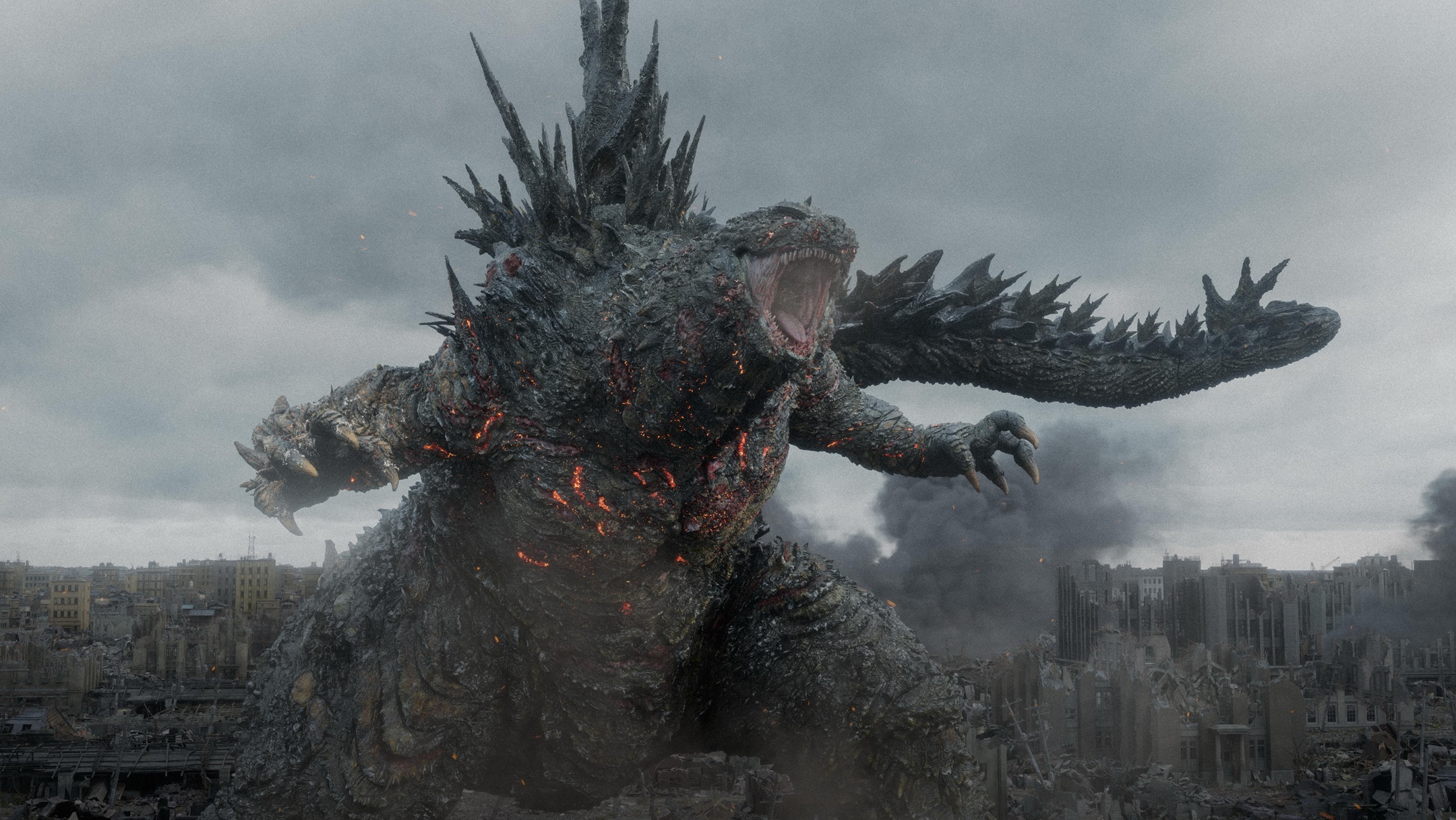
Image Credit © Toho Monstrous in size and even more so in its melodrama, Godzilla: Minus Zero continues director Takashi Yamazaki's focus on the horror and humanity in his kaiju universe, however more time with the title character was needed to truly make this a monster bash to admire. It’s quite remarkable that Yamazaki’s 2023 Godzilla: Minus One stands as the best in the series, especially given the vast 72-year history of the iconic kaiju. Godzilla: Minus Zero arrives in cinemas with a healthy amount of expectation, and as a sequel it largely lives up to the job description: a little more epic, a little darker. It also takes its human dramatics far too seriously, to the point of unintentional comedy. Two years after the events of Godzilla: Minus One, Japan is preyed upon by another kaiju in the form of the three-headed, dragon-like King Ghidorah. Tasked with destroying the creature are a group of scientists led by Kenji Noda (Hidetaka Yoshioka), head of the Large-Scale Disaster Response Bureau who previously helped defeat Godzilla, along with heroic pilot Koichi (Ryunosuke Kamiki) and his wife Noriko (Minami Hamabe). Their plan: lure a now rejuvenated Godzilla into a battle of titans against King Ghidorah. Yamazaki does the impossible and betters the epic kaiju action of Godzilla: Minus One with impressively monstrous sequences in which both land and air become the stage for the film’s iconic creatures to live up to their reputation as larger-than-life destroyers. A mid-movie sequence involving King Ghidorah and a squadron of fighter pilots is thrilling, frightening, and an incredibly impressive display of visual effects wizardry that places viewers in the cockpit of a dogfight pitting man against beast. Another giant leap is taken in the creation of the film’s kaiju, with Japanese visual effects house Shirogumi outdoing their Oscar-winning work on Godzilla: Minus One. King Ghidorah is presented at its most frightening yet: a three-headed mass-murder machine that holds dominion over sky and ground. Then comes the big guy Godzilla who returns as a resurrected, rejuvenated, and raging force of nuclear-enhanced nature. It is all the more disappointing, then, that Godzilla is featured so sparingly in Godzilla: Minus Zero, with his first appearance arriving almost an hour into the film.  What is very present in Godzilla: Minus Zero is a very serious tone, a reflection on the horrors of the Hiroshima and Nagasaki bombings that has been part of the Godzilla story since its inception. Yamazaki gave that history real dramatic power in Godzilla: Minus One, but here the drama frequently tips into unintentionally funny bursts of emotion. Min Tanaka’s portrayal of a biologist and Hiroshima survivor, whose descent into revenge-driven madness grows increasingly extreme, is a clear example. There is a lot to like in Godzilla: Minus Zero, particularly in its spectacle and effects work. Yet the film tips the scale too hard toward ineffective drama that, unfortunately, lessens the stakes at play. Hopefully the eventual next instalment will have a mightier roar.
RELATED CONTENT
|

|
Created and Edited by Matthew Pejkovic / Contact:
mattsm@mattsmoviereviews.net Logo created by Colony Graphic Design / Copyright © Matthew Pejkovic |